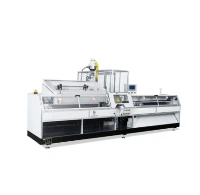

The extrusion method for plastic extruders generally refers to the process of melting plastic at high temperatures-typically around 200°C-and then passing the molten plastic through a die to form a desired shape. Extrusion molding demands a profound understanding of plastic properties and extensive experience in die design; consequently, it is a molding method with relatively high technical requirements.
Extrusion molding is a process in which material is continuously forced through a die in a fluid state-facilitated by heating and pressurization within an extruder-to achieve a specific shape; it is also referred to as "plastic extrusion." Compared to other molding methods, it offers the advantages of high efficiency and low unit costs.
The extrusion method is primarily utilized for molding thermoplastic plastics, though it can also be applied to certain thermosetting plastics. Extruded products take the form of continuous profiles-such as pipes, rods, wires, sheets, films, and wire and cable sheathing. Furthermore, the process can be employed for plastic mixing, plasticizing and pelletizing, coloring, and compounding.
Extruded products are generally referred to as "profiles"; given that their cross-sectional shapes are frequently irregular, they are also commonly termed "special-shaped profiles."